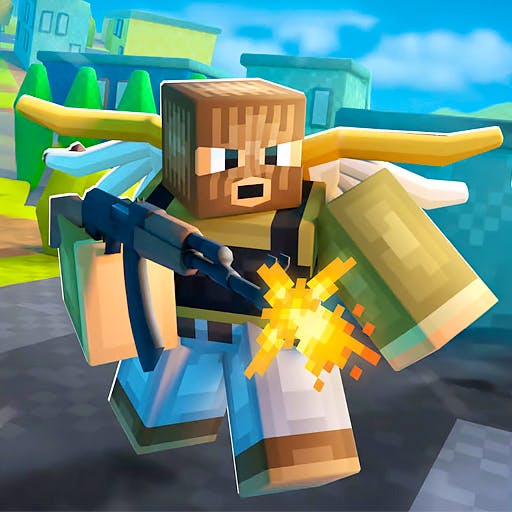
 Let’s analyze the arena. Most .io games succeed through sheer, unadulterated chaos, sacrificing any semblance of strategy for instant gratification. Poxel.io presents itself as another one of these colorful, click-and-forget distractions. However, to dismiss it as such is a critical error. As a player who dissects game mechanics for fun, I’ve found Poxel.io to be a surprisingly nuanced tactical shooter hiding in a pixelated shell. It’s not about mindless running and gunning; it’s about map control, resource timing, and psychological warfare.
The basic framework is familiar: you spawn into a top-down arena with a basic weapon, collect power-ups for better gear, and fight every other player to climb a live leaderboard. The simplicity is a facade. What fascinates me is the game’s elegant economy of information and space. The “Poxel” art style, while charming, serves a critical function: visual clarity. There is no visual noise. Every projectile, player outline, and power-up glow is instantly recognizable. This clarity transforms the arena into a chessboard. You can track multiple combatants, predict engagements based on weapon-fire trails, and plan routes that maximize cover while passing near potential weapon spawn points. The spawning of power-ups isn’t merely random; it creates focal points of conflict, zones you must decide to contest or avoid based on your current loadout.
I admire this game because it respects intelligence. It provides all the data for informed decision-making. Do you push the player with the rocket launcher, knowing its splash damage is deadly in corridors but vulnerable in open spaces? Do you camp a health pack spawn when you’re low, or risk moving to secure a weapon that could change the tide? The balance between weapons feels deliberate. Each has a distinct role—rate of fire, projectile speed, area of effect—creating a subtle rock-paper-scissors dynamic that rewards adaptation over simple twitch reflexes.
Why should the discerning player invest time here? In an era where multiplayer shooters often demand 100-hour commitments to unlock competitive tools, Poxel.io offers pure, distilled tactical combat. Every match is a self-contained test of your decision-making under pressure. It proves that strategic depth doesn’t require complicated controls or a 500-page wiki; it can emerge from a handful of perfectly tuned variables within a clear, readable space. For anyone who enjoys outthinking opponents as much as outshooting them, Poxel.io is an essential and brilliantly designed playground.